
Sustainable-ish Family Life
Can AI Help Save a Struggling Eggplant? What Was Still Worth Saving
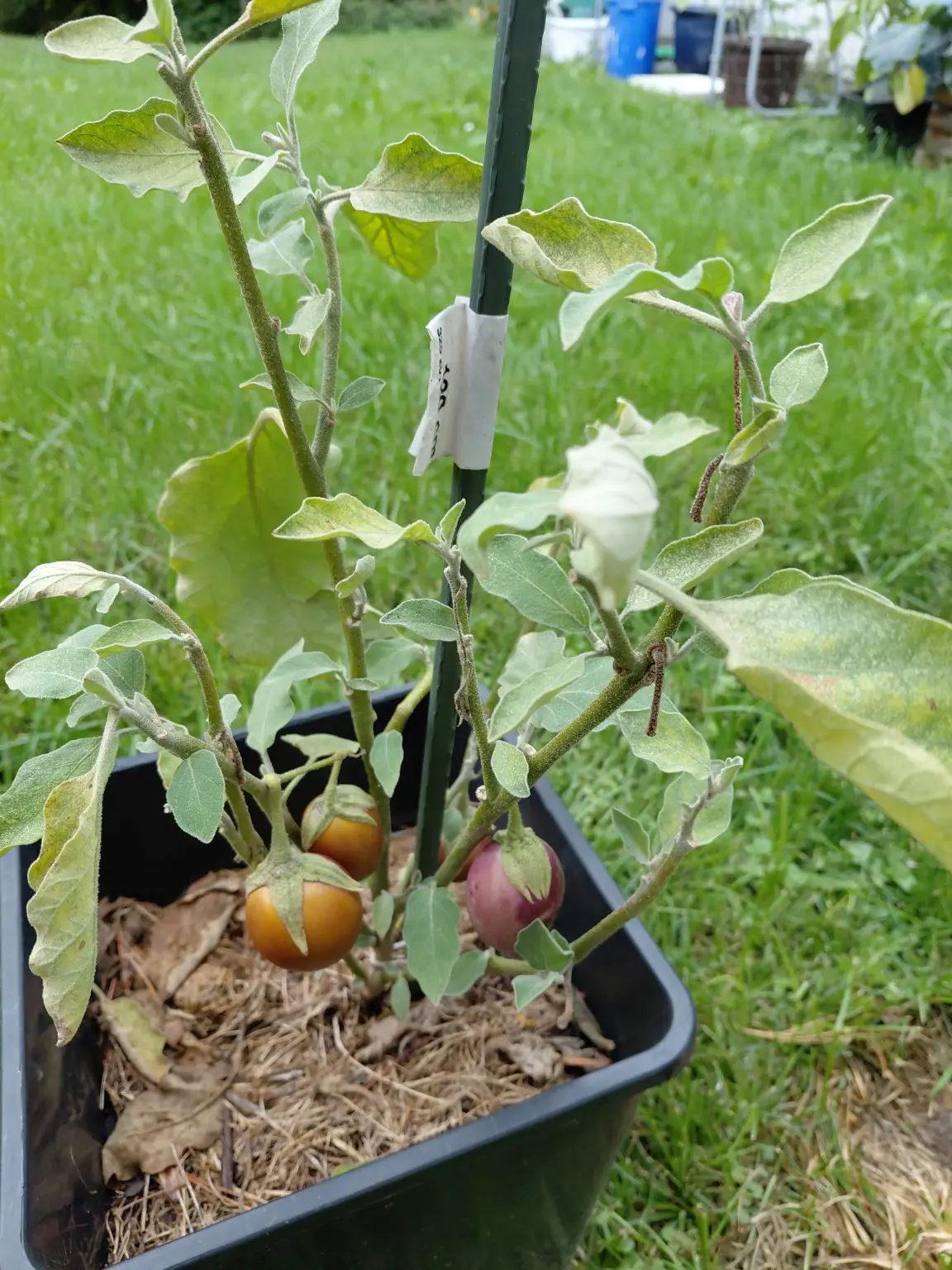
My eggplant plant looked rough enough that my brain immediately went into fix-it mode.
More water?
More fertilizer?
Cut something off?
Give up for the season?
I couldn’t see an obvious pest, and I didn’t want to start throwing random solutions at a plant just because it looked unhappy.
So instead, I gave AI the photos and asked a much more useful question:
What is actually still worth doing?
Not: How do I save this plant at all costs?
Just: what should I check, what is worth trying, and when does it make more sense to stop?
The real-life problem
This was late in the season, and the plant was clearly stressed.
Some of the leaves looked pale, damaged and generally not very enthusiastic about life anymore.
There wasn’t one obvious thing screaming:
This is definitely the problem.
And that matters.
A photo can show symptoms. It doesn’t automatically tell you the cause.
So I deliberately didn’t ask AI for a confident diagnosis.
I asked it to separate:
what it could actually observe
from
what it was only inferring.
That turned out to be one of the most useful parts of the experiment.
What I asked AI
I gave it clear photos of the plant and asked:
“I have an eggplant plant in early September that looks stressed and unhealthy, but I can’t see an obvious pest.
Based on these photos:
- What can you actually observe?
- What are the most likely explanations?
- What should I check before doing anything?
- What is the smallest sensible next step?
- Would fertilizing still make sense this late in the season?
- What should I avoid doing?
- At what point is it no longer worth trying to save the plant?
Please separate what you can actually observe from what you are only inferring. I want the most realistic answer, not the most optimistic one.”
That last sentence is probably the part I’ll keep using.
Because AI is very good at producing an answer.
That is not the same thing as knowing exactly what happened to your plant.
What AI suggested checking first
Instead of immediately adding another treatment, the useful direction was to inspect the plant more closely.
So I checked the leaves, the undersides of the leaves, the stems, the base of the plant and the soil.
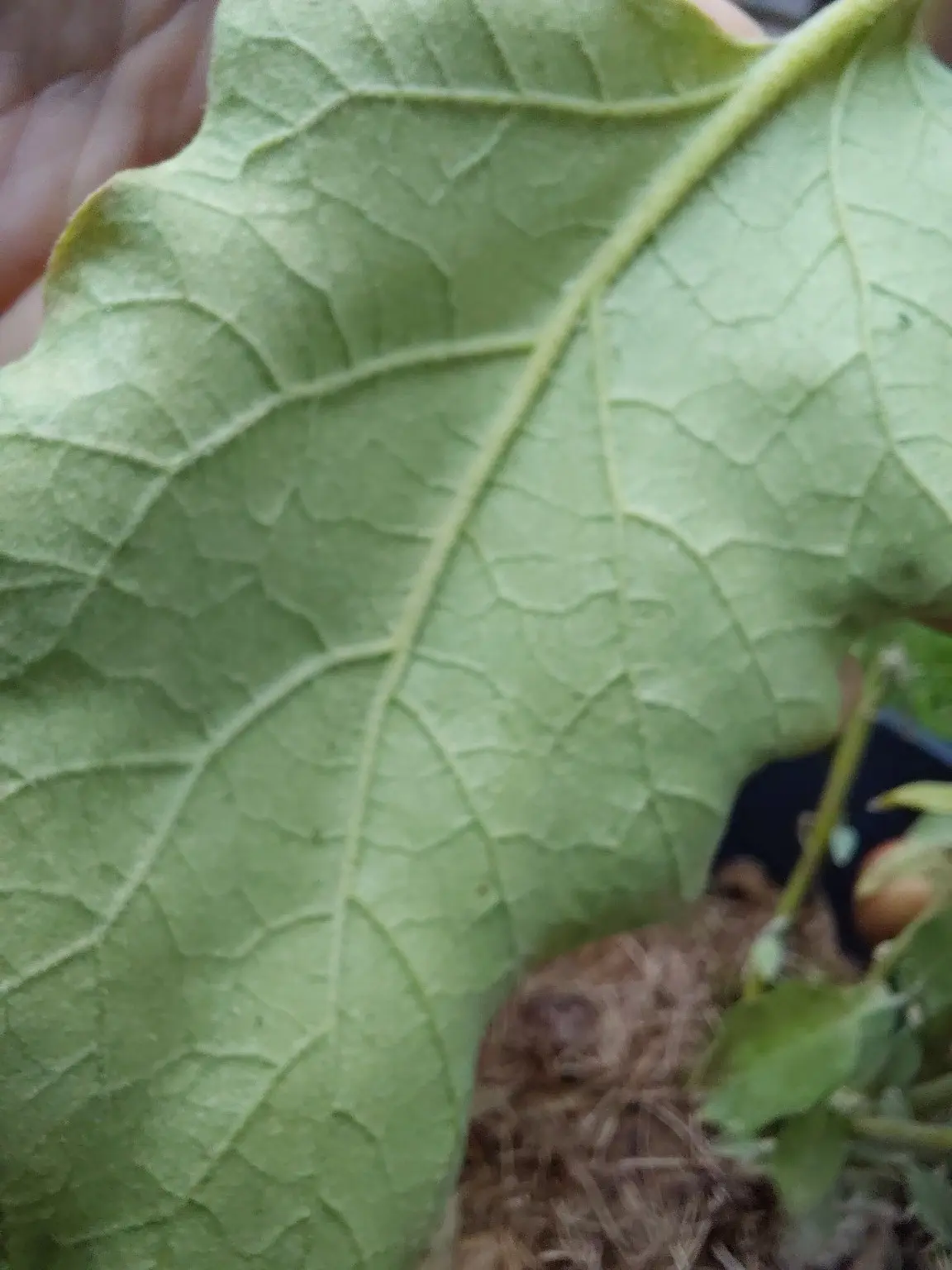
That sounds extremely obvious when written down.
And that was kind of the point.
I didn’t actually need a complicated garden rescue plan.
I needed something to stop me going straight from:
“This plant looks bad.”
to:
“I should probably add something.”
The fertilizer question
I already had nettle and dandelion liquid fertilizer available, so one of my first thoughts was:
Maybe it just needs feeding?
But “struggling plant = more fertilizer” isn’t a particularly good rule.
Eggplants do need nutrients during the growing season, but adding more fertilizer is not automatically the answer to a plant that looks stressed. Too much nitrogen, for example, can encourage lots of leafy growth while delaying flowering and fruit development.
So the useful takeaway for me wasn’t:
AI told me which fertilizer to use.
It was:
Don’t add something just because you feel like you should be doing something.
Check first.
Then decide.
Very unexciting.
Also surprisingly useful.
Then there was the overripe eggplant
And this is where the experiment got more interesting.
There was also a very overripe eggplant on the plant.
Definitely not looking like dinner.
As eggplants become over-mature, they get much seedier and their eating quality drops.
So as food?
Yeah… no.
But the seeds were another question.
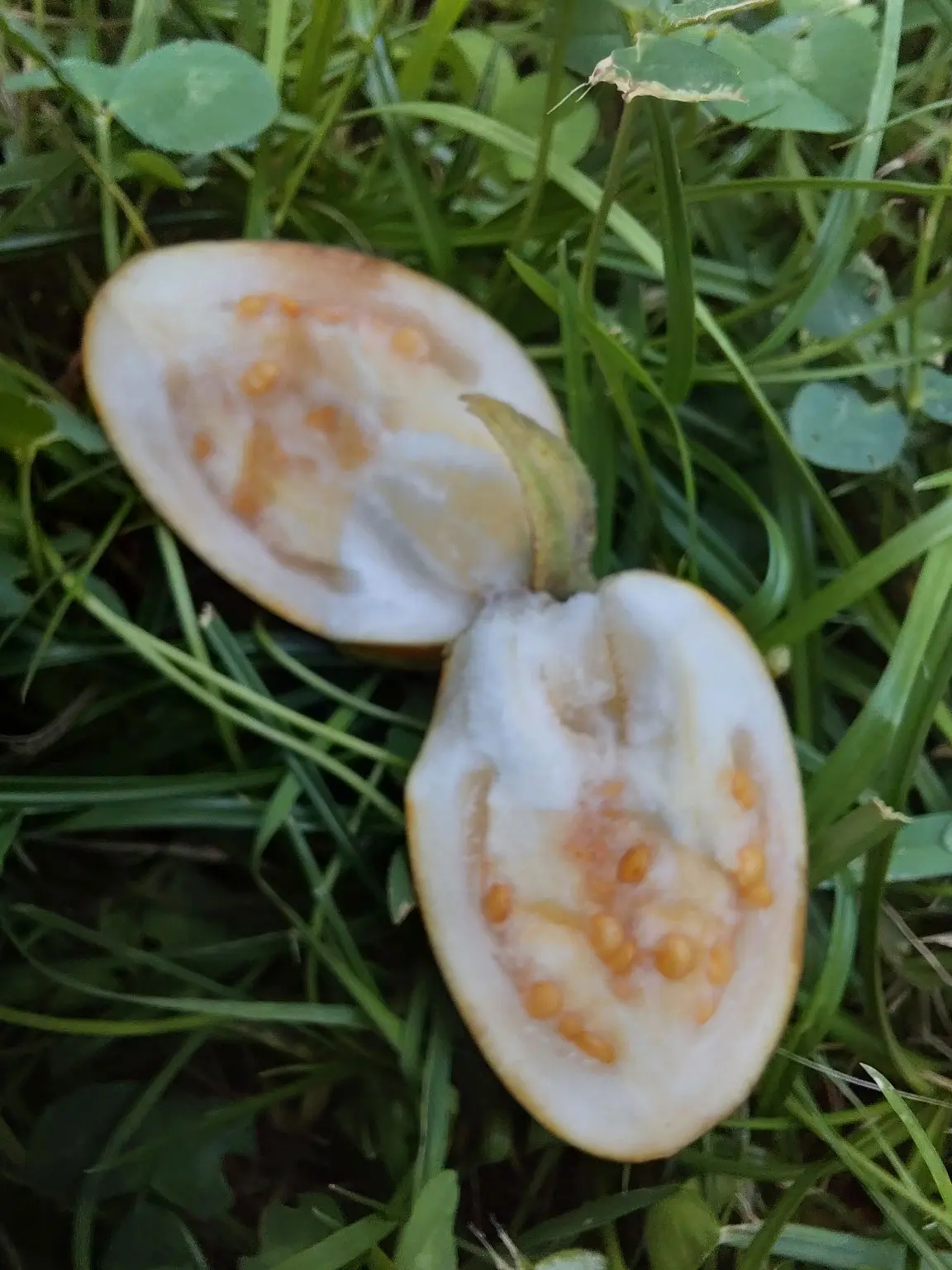
For seed saving, you actually want mature fruit.
Which means a fruit being too old for dinner does not automatically make it useless.
When I cut this one open, the seeds looked mature enough to be worth trying to save.
So I removed them, rinsed them and spread them out to dry thoroughly.
That was probably my favorite part of the whole experiment.
Even if the plant itself is close to done, something useful may still be worth saving.
From “maybe useful” to actually saving them
This is where the blog gets one step further than the video.
I actually went ahead and cleaned the seeds.
They’re now drying.
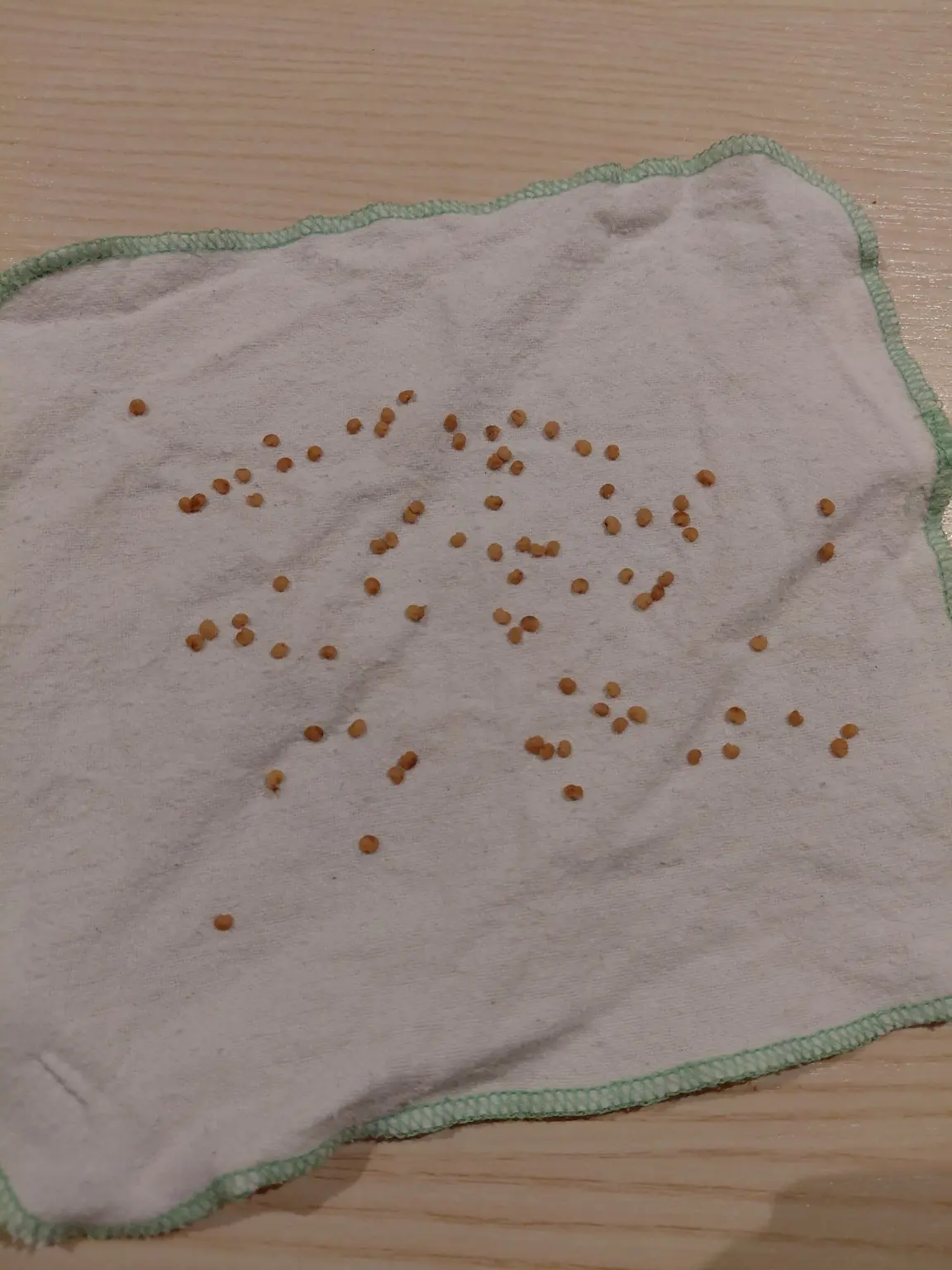
I’ll let them dry thoroughly before storing them, label them, and then see what happens next year.
No dramatic promise.
No:
“Look, AI saved next year’s garden!”
Just:
These looked worth trying. So I saved them.
And I really like that as an outcome.
A small note about saving eggplant seeds
There are still a couple of uncertainties here.
Mature-looking seeds are not a guarantee that they will germinate.
I won’t actually know how viable they are until I try them.
And if the original plant was an F1 hybrid, seeds saved from it may not produce plants that look or perform exactly like the parent plant.
So this isn’t a guaranteed shortcut to free eggplants next year.
It’s an experiment.
And that feels much more accurate.
So… was the plant worth saving?
Maybe.
Maybe not.
And I think that is the more useful answer.
AI didn’t magically diagnose the plant.
It didn’t turn late summer back into peak growing season.
And it didn’t make the damaged leaves healthy again.
What it did do was help me break one vague problem into smaller decisions:
Is there anything obvious I should check?
Is adding something actually justified?
Is there still something useful here even if the whole plant doesn’t recover?
That last question changed the story for me.
Because “saving something” didn’t necessarily have to mean saving the entire plant.
The fruit might be past eating.
The plant might be near the end of its season.
But the seeds?
Those were still worth trying.
What I’d do differently next time
I would absolutely use AI again.
But less like:
“Tell me what’s wrong.”
And more like:
“Help me decide what to check next.”
That small difference matters.
Especially with plants, where similar symptoms can have several possible causes and a few photos only show part of the picture.
My process next time would be:
- Take clear photos.
- Describe what I can actually see.
- Ask AI to separate observation from inference.
- Ask for the smallest sensible next step.
- Verify anything involving disease, treatments, food safety or chemicals before acting.
- Accept that sometimes the sensible answer is simply: this one is done.
That feels much more useful than chasing a perfect rescue.
Try it yourself
A realistic plant-check prompt
If you have a struggling plant and want to use AI without pretending it is a plant doctor, try this:
“Here are photos of my plant. Please separate what you can actually observe from what you are only inferring.
Tell me what looks unusual, what I should check myself, the smallest sensible next step, what I should avoid doing, and when it would be more reasonable to stop trying to save it.
Please do not give me a confident diagnosis from photos alone.”
Then do the most important part:
Go back to the actual plant and check.
Your turn